The short version
A healthy Betta needs a properly sized, heated, filtered and fully cycled aquarium, clean and stable water, a good-quality high-protein diet, gentle water movement, places to rest and hide, and regular observation from you. For a single adult Betta, I regard 5 US gallons (around 19 litres) as a sensible practical minimum, with larger aquariums being even easier to keep stable.
I have kept freshwater fish since the early 1990s, and Bettas have been part of the hobby for me for a very long time. One thing that has always struck me is the gap between the way Bettas are sometimes sold and the way they behave when they are actually given a decent home.
Put a Betta in a warm, planted aquarium with clean water and enough room to explore and you do not get a fish that simply sits there looking decorative. You get a fish that patrols its territory, investigates new objects, learns where food arrives from, rests on leaves, watches what is happening outside the glass and, in many cases, comes straight over when its keeper approaches.
This guide is intended to give you the foundations of good Betta care without turning a fairly straightforward hobby into a chemistry degree. There are a few things you genuinely need to get right. Beyond those, a lot of Betta keeping is simply about providing stability, paying attention to your fish and resisting the temptation to keep changing things that are already working.
Betta Care at a Glance
What Is a Betta Fish?
When most people say “Betta fish”, they mean Betta splendens, the domesticated Siamese fighting fish found in aquarium shops around the world. There are other species in the genus Betta, but their needs can be quite different, so this article is specifically about the familiar domestic Betta.
Bettas originate from Southeast Asia and belong to a group of fishes known as labyrinth fishes. Alongside their gills, they possess a specialised labyrinth organ that allows them to take oxygen directly from air at the water's surface.
That adaptation is fascinating, but it has also helped create one of the longest-running myths in fishkeeping: because a Betta can gulp atmospheric air, it can live happily in dirty, poorly oxygenated water. It cannot. Being able to breathe air is not the same thing as being immune to ammonia, nitrite, low temperature or chronic poor water quality.
Surface breathing is completely normal. A healthy Betta may swim up, take a quick gulp of air and carry on with its day. What matters is context. A fish constantly hanging at the surface while breathing heavily is very different from a relaxed fish occasionally using its labyrinth organ.
What Size Tank Does a Betta Need?
If there is one change I would like to see in the way Bettas are kept, it is the disappearance of the tiny “Betta bowls” and decorative desktop containers that still turn up in shops and online.
Yes, a Betta can physically fit inside one. That is a very low bar for deciding whether something is a suitable home.
For one adult Betta, I recommend starting at 5 US gallons, or roughly 19 litres. If you have room for something larger, all the better. A 10-gallon aquarium gives you more scope for planting, hardscape and gentle swimming space, and its greater volume makes changes in water chemistry and temperature happen more slowly.
That last point is often overlooked. Small tanks are not necessarily easier tanks. A little uneaten food, a missed water change or a failed heater can affect a very small volume of water surprisingly quickly. More water gives you a larger margin for error.
Long tanks are particularly useful
Bettas use the whole aquarium, but they regularly visit the surface. I tend to favour tanks with useful horizontal swimming space rather than unusually tall, narrow aquariums. This is especially worth considering with heavily finned males, which may have to work harder to move around than short-finned plakats.
Whatever shape you choose, use a secure lid or cover. Bettas can jump, including fish that have never shown the slightest interest in jumping before.
Do Betta Fish Need a Heater?
Bettas are tropical fish. In most homes, that means a heater is not an optional extra; it is part of the basic aquarium equipment.
I generally aim for roughly 25–27°C (77–81°F) for domestic Bettas. You will see slightly different recommended ranges, and a healthy fish is not going to collapse because the thermometer reads a fraction outside mine. What I care about just as much as the exact number is stability.
A room that reaches 26°C in the afternoon but falls to 19°C overnight is not providing a stable 26°C aquarium. An appropriately sized, thermostatically controlled heater takes those swings out of the equation.
I also like a separate thermometer. Heaters can fail, thermostats can drift, and the number printed on a heater dial is not a measurement of the water. A thermometer gives you an independent check.
Do not judge a Betta aquarium by how warm the room feels. Water temperature can be quite different, especially overnight, near windows or in rooms where heating is turned down.
I have written a separate guide covering heater size, suitable temperatures, warm rooms, signs a Betta may be too cold and what to look for when choosing a heater. Read: Do Betta Fish Need a Heater? →
Do Bettas Need a Filter?
I recommend filtration in a Betta aquarium. A filter does more than make the water look clear. Its most important job is providing a large, oxygenated surface on which beneficial bacteria can live.
Those bacteria are part of the biological filtration that processes the waste produced by your fish. Without understanding that, it is very easy to fall into the trap of thinking that crystal-clear water must also be safe water.
Bettas do not, however, need to be blasted around the aquarium. This is especially true of males with large, elaborate fins. If your fish has to swim hard simply to stay in one place, the flow is too strong.
Sponge filters are a very good option. Small internal filters can work well too, particularly if the output is adjustable or can be diffused. Hang-on-back filters can also be used successfully, but again I would pay attention to the current rather than simply buying the most powerful filter that fits the tank.
Watch the fish, not the label on the filter box. A Betta should be able to cruise around, hover and rest without constantly being pushed away from its chosen position.
I have written a separate guide covering why Bettas benefit from filtration, how much flow is suitable, the best filter types, whether an unfiltered tank can work and common filtration mistakes. Read: Do Betta Fish Need a Filter? →
Cycle the Aquarium Before Adding Your Betta
A new aquarium may look finished the moment the water goes in, but biologically it is not yet mature.
Fish release ammonia through their waste and normal metabolism. Ammonia is toxic. In a mature aquarium, beneficial bacteria convert ammonia into nitrite, which is also toxic, and then other bacteria convert nitrite into nitrate. Nitrate is generally much less immediately dangerous and can be controlled through plants, sensible stocking and routine maintenance.
Establishing these bacterial populations is what aquarists mean when they talk about cycling a tank.
The easiest route for a beginner is a fishless cycle, completed before the Betta comes home. Test the aquarium rather than relying on a calendar. A cycled aquarium should be able to process the expected waste load without leaving detectable ammonia or nitrite.
If you already have the fish in an uncycled tank, the answer is not to panic or abandon filtration. It means you need to monitor ammonia and nitrite carefully and manage the water while the biological filter establishes.
Betta Water Parameters and Water Quality
Bettas have a reputation for tolerating a broad range of water conditions, and domestic strains usually are fairly adaptable. That does not mean there is value in chasing a supposedly perfect pH with bottles of chemicals.
In an ordinary Betta aquarium I would much rather see a stable pH that is reasonably suitable than a keeper constantly pushing the pH up and down trying to hit an exact number.
For day-to-day husbandry, the parameters I want a keeper to understand are:
- Ammonia: ideally undetectable in a mature aquarium.
- Nitrite: ideally undetectable in a mature aquarium.
- Nitrate: kept under control through sensible stocking, feeding, plants and maintenance.
- Temperature: warm and stable.
- pH: appropriate and, importantly, reasonably stable.
Condition tap water where necessary to deal with chlorine or chloramine before it enters the aquarium. If your water supplier changes treatment methods seasonally, do not assume that what came from the tap last year is identical to what comes from it today.
How often should you change the water?
There is no honest single percentage that works for every Betta aquarium. A lightly stocked, heavily planted 10-gallon tank may behave very differently from a bare 5-gallon tank that is fed heavily.
For a new keeper, a modest regular partial water change is a sensible starting habit. Test the water, observe how quickly waste accumulates and adjust your routine around the actual aquarium. Avoid repeatedly stripping the tank down and replacing all of the water. Stability is your friend.
Plants, Substrate and Decoration
A Betta aquarium does not need an elaborate aquascape, but it should not feel like an empty glass box either. Bettas make use of structure. They investigate gaps, shelter behind wood, rest on leaves and often choose one particular part of the aquarium as their favourite spot.
Live plants are excellent if you enjoy them. Species such as Anubias, Java fern and many Cryptocoryne are forgiving choices, while floating plants can give a Betta the shaded, secure feeling many individuals seem to appreciate.
Artificial plants are not automatically bad, but avoid hard, sharp plastic. Flowing fins can snag remarkably easily. The same applies to ornaments. If a hole looks just about large enough for your Betta to squeeze through, assume at some point it may try.
Substrate is largely a matter of the overall setup. Sand and fine gravel both work. If you use rooted plants, choose something that suits them; if you keep epiphytes such as Anubias attached to wood or rock, the substrate becomes much less important.
Give your Betta somewhere to rest near the surface
Long-finned Bettas in particular often appreciate broad leaves or other safe resting places in the upper part of the aquarium. Do not be alarmed if you see your fish lying on a plant leaf. Resting is normal. What matters is whether that behaviour is normal for your fish or represents a sudden change accompanied by other warning signs.
What Should You Feed a Betta Fish?
Bettas are primarily insect and small-invertebrate feeders by nature, so their aquarium diet should be relatively protein-rich.
A good Betta pellet makes an excellent staple because it is convenient and nutritionally consistent. I then like to add some variety rather than feeding the same dry food at every meal for the entire life of the fish. Depending on what is available to you, suitable frozen or live foods can include bloodworm, brine shrimp, daphnia and mosquito larvae.
“Variety” does not need to become a cupboard containing twenty tubs of food. A reliable staple plus a few appropriate alternatives is plenty.
How much should you feed?
This is where many otherwise well-kept Bettas run into trouble.
Packet instructions are necessarily generic, while pellets vary enormously in size. I do not like rules such as “always feed exactly four pellets” because four tiny pellets and four large pellets are not the same meal.
Feed small portions and watch your fish's body condition over time. A healthy Betta should look well-fed but not permanently swollen through the abdomen.
Most healthy adults can be fed once or twice a day. If feeding twice, split the daily amount rather than automatically doubling it.
Bettas are persuasive. Many will rush to the front and behave as though they have not seen food for a week, even if you fed them that morning. Appetite is useful information, but it is not a portion-control system.
Understanding Normal Betta Behaviour
One reason I enjoy Bettas is that individuals can behave very differently. Some are constantly on patrol. Others are far more relaxed. Some flare at anything reflective; others barely react. A few will investigate your hand during maintenance while another fish may disappear behind the nearest plant.
Learning what is normal for your Betta is more useful than memorising a list of behaviours from the internet.
Flaring
Bettas flare by extending their gill covers and fins, usually as a territorial display. Occasional flaring is normal. Constant exposure to another male, a mirror or a persistent reflection is different and can leave the fish in a near-continuous state of territorial arousal.
Bubble nests
Male Bettas commonly build clusters of bubbles at the surface. It is reproductive behaviour and can happen even when no female is present. A bubble nest is interesting, but I would not use its presence or absence as a simple “happy versus unhappy” test.
Resting
Bettas rest. They may sit on leaves, wood, equipment or even the substrate. A fish lying still is not automatically sick. What makes me pay attention is a sudden departure from its usual pattern: for example, a previously active fish spending the whole day on the bottom, refusing food and clamping its fins.
Can Bettas Live With Other Fish?
Sometimes. This is an area where I would avoid absolute promises.
Bettas are territorial fish and individual temperament varies enormously. One male may coexist with peaceful tank mates for years, while another decides that anything moving in its aquarium is unacceptable.
Tank size matters. A community setup gives you far more options in a properly sized aquarium with broken lines of sight than it does in a cramped tank where every fish is permanently in the Betta's territory.
Avoid obvious fin nippers and very aggressive species. I am also cautious about combining Bettas with other showy, long-finned fish that may provoke territorial behaviour.
What about shrimp and snails?
Snails are often easier companions, although individual Bettas may still peck at antennae or investigate them rather enthusiastically.
Shrimp are less predictable. Some Bettas ignore adult shrimp. Others discover that shrimp are edible and become remarkably efficient hunters. Dense planting and hiding places can improve the shrimps' chances, but if preserving every shrimp matters to you, do not rely on the Betta being friendly.
Domestic male Betta splendens should not be kept together in the same ordinary aquarium. Their territorial aggression can result in serious injury or death.
Keeping Your Betta Healthy
The most useful health tool you have is familiarity. If you look at your fish every day, you are much more likely to notice when something is different.
Changes worth investigating include:
- a sudden loss of appetite;
- clamped fins;
- rapid or laboured breathing;
- persistent rubbing or flashing;
- new white spots, growths or patches;
- swelling that does not follow a normal meal;
- raised scales or a “pinecone” appearance;
- rapid fin deterioration;
- difficulty maintaining buoyancy;
- a marked change in activity or posture.
Before reaching for medication, check the basics. Test the water. Confirm the temperature. Look at the filter. Think about what has changed recently. A treatment cannot compensate for an aquarium that is still exposing the fish to poor water quality.
That does not mean every illness is caused by bad husbandry. Fish get sick, parasites exist and infections do happen. It simply means that correcting the environment should be part of the investigation, not an afterthought.
A Simple Betta Tank Maintenance Routine
Good Betta care does not require dismantling the aquarium every weekend. In fact, constantly scrubbing, replacing and sterilising everything is often counterproductive.
A sensible routine might include:
- checking the fish's behaviour and appetite every day;
- glancing at the thermometer regularly;
- removing uneaten food and obvious debris;
- testing water often enough to understand how your particular aquarium behaves;
- performing appropriate partial water changes;
- cleaning filter media gently when flow becomes restricted;
- trimming plants and removing dead leaves as required.
When cleaning biological filter media, I avoid aggressively washing it under untreated chlorinated tap water. The point is to remove accumulated muck while preserving the bacterial colony, not to make the media look new again.
Common Betta-Care Mistakes
Keeping a Betta in a tiny bowl
It reduces swimming room, makes heating and filtration difficult and gives you very little water volume to buffer mistakes.
Keeping the water too cold
A Betta surviving at room temperature does not automatically mean the temperature is suitable. Check the water itself with a thermometer.
Using a filter with excessive flow
Filtration is useful; turning the aquarium into a washing machine is not. Adjust the flow to the fish.
Adding the fish to an uncycled aquarium without understanding ammonia
A tank can look spotless while containing harmful levels of invisible nitrogenous waste. Learn the nitrogen cycle and use a suitable test kit.
Overfeeding
More food is not more care. Overfeeding can affect the fish and also puts unnecessary waste into the aquarium.
Changing too much, too often
Fish benefit from consistency. Do the maintenance the aquarium needs, but do not confuse constant interference with good husbandry.
Bringing a New Betta Home: The First Week
The first few days are mostly about giving the fish a stable environment and leaving it enough room to settle. Do not be disappointed if a newly purchased Betta is initially shy, refuses its first meal or spends time exploring every corner of the tank.
Keep the lighting sensible, avoid repeatedly tapping the glass or rearranging the aquarium, and watch how the fish responds. Check the water, especially if there is any doubt that the tank was fully cycled before the Betta arrived.
Once settled, many Bettas become remarkably interactive. That is the point where keeping one becomes much more enjoyable than simply owning a colourful fish.
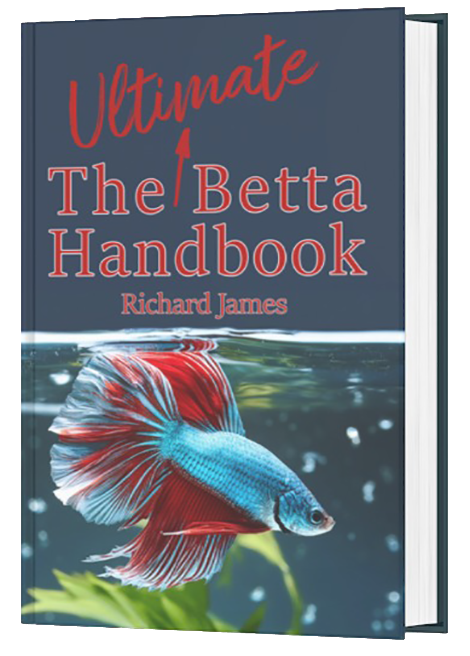
Want the complete guide?
Keep Your Betta With Confidence
The Ultimate Betta Handbook brings feeding, tank setup, filtration, heating, water quality, behaviour, tank mates, breeding and health together in one practical reference.
Betta Fish Care FAQ
Are Betta fish easy to care for?
They are fairly straightforward once the aquarium is set up correctly. The trouble is that Bettas are often marketed as fish that need almost no equipment. Give one a suitable heated, filtered and cycled tank, and routine care is much easier.
What size tank does a Betta fish need?
For a single adult Betta, I recommend a minimum of 5 US gallons, which is roughly 19 litres. Larger is welcome, particularly if you want a planted aquarium or carefully chosen tank mates.
Do Bettas need a heater?
In most homes, yes. Bettas are tropical fish and benefit from warm, stable water. I generally keep domestic Bettas at around 25–27°C (77–81°F).
Do Bettas need a filter?
I recommend one. A filter supports biological filtration and helps maintain stable water quality. Choose gentle flow or an adjustable filter so the fish is not continually fighting the current.
How often should I feed my Betta?
Most healthy adult Bettas can be fed small portions once or twice daily. Judge the amount by the food size, the individual fish and its body condition rather than blindly following a fixed pellet count.
Can a Betta live in a bowl?
A Betta may survive for a period in a bowl, but that does not make it good husbandry. Small bowls make stable heating, filtration and water quality much harder to provide and offer very limited usable space.